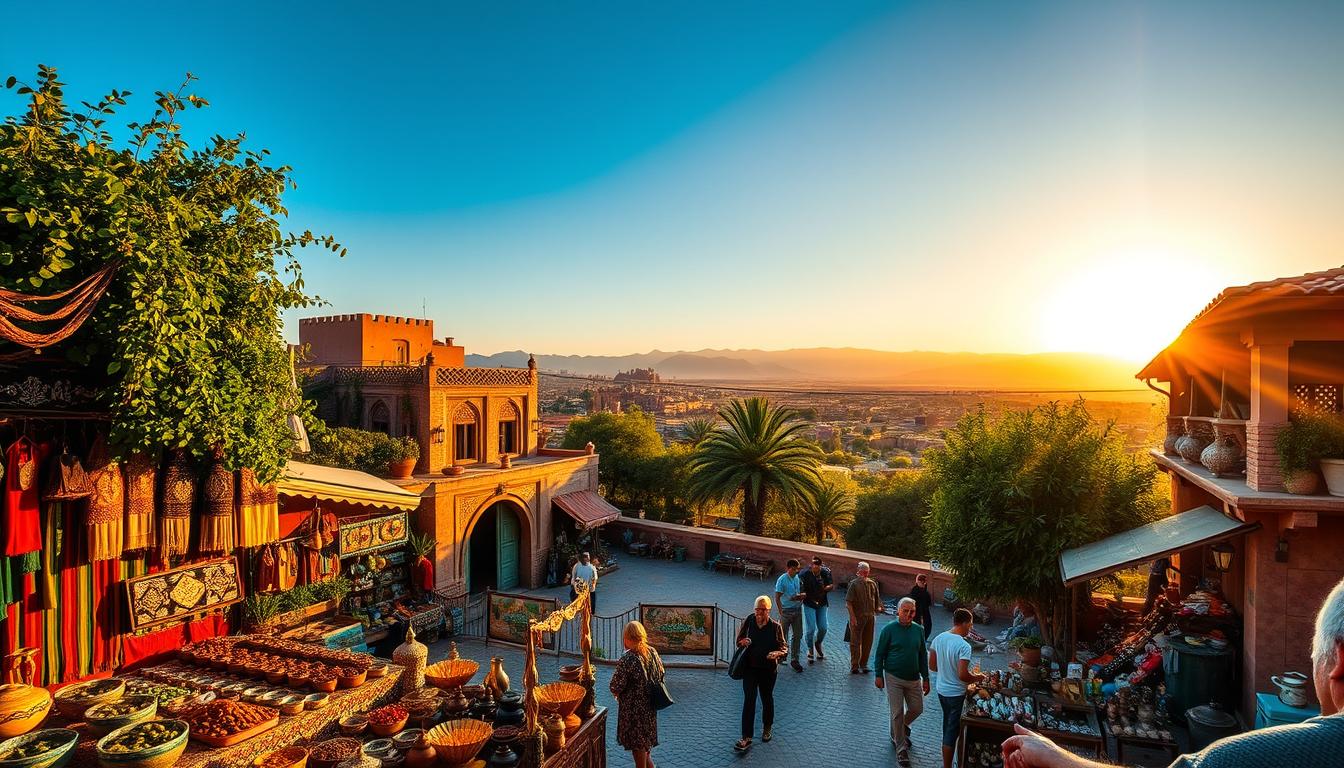
Located in the heart of North Africa, Morocco is a treasure trove of rich history, vibrant culture, and breathtaking landscapes. As a traveler, you can expect to be enchanted by the diverse experiences and attractions that this fascinating country has to offer.
From the bustling streets of Marrakech to the serene dunes of the Sahara Desert, Morocco is a destination that promises to captivate your senses. Whether you’re interested in exploring the ancient medinas, relaxing on the beautiful beaches, or immersing yourself in the local culture, Morocco has something for every kind of traveler.
Table of Contents
The Magic of Morocco: A Land of Contrasts
With its rich history and diverse landscapes, Morocco is a land of endless discovery and exploration. This North African country is a treasure trove of experiences, from the bustling markets to the serene natural beauty.
Geographic Diversity: From Mountains to Deserts
Morocco’s geography is as varied as it is breathtaking. The Atlas Mountains stretch across the country, offering hiking trails, Berber villages, and stunning vistas. In contrast, the Sahara Desert beckons with its endless dunes and tranquil oases. The country’s diverse landscapes also include coastal plains, rivers, and forests, making it a haven for nature lovers and adventure seekers.
- The Atlas Mountains provide opportunities for hiking and exploring Berber culture.
- The Sahara Desert offers camel treks and desert camping experiences.
- Morocco’s coastline features beautiful beaches and charming coastal towns.
A Brief History of the Moroccan Kingdom
Morocco’s history is a rich tapestry of various cultures and empires. From ancient Berber tribes to the Alawite dynasty, which has ruled the country since the 17th century, Morocco’s past is marked by significant events and influences. The country’s strategic location made it an important hub for trade and cultural exchange between Africa, Europe, and the Arab world.
- The Idrisid dynasty founded Fes, making it a major cultural and religious center.
- The Alawite dynasty has maintained Morocco’s stability and continuity.
- Morocco’s history has been shaped by its interactions with European colonizers and its struggle for independence.
Imperial Cities: Morocco’s Historic Treasures
From Marrakech to Fes, Morocco’s imperial cities are steeped in history and architectural splendor. These cities have been the heart of Moroccan culture and politics for centuries, offering a rich tapestry of experiences for visitors.
Marrakech: The Red City
Marrakech, known as the Red City due to its red sandstone architecture, is a vibrant and bustling metropolis. The city’s historic center is a UNESCO World Heritage Site, featuring numerous landmarks that showcase its rich cultural heritage.
Jemaa el-Fnaa and the Medina
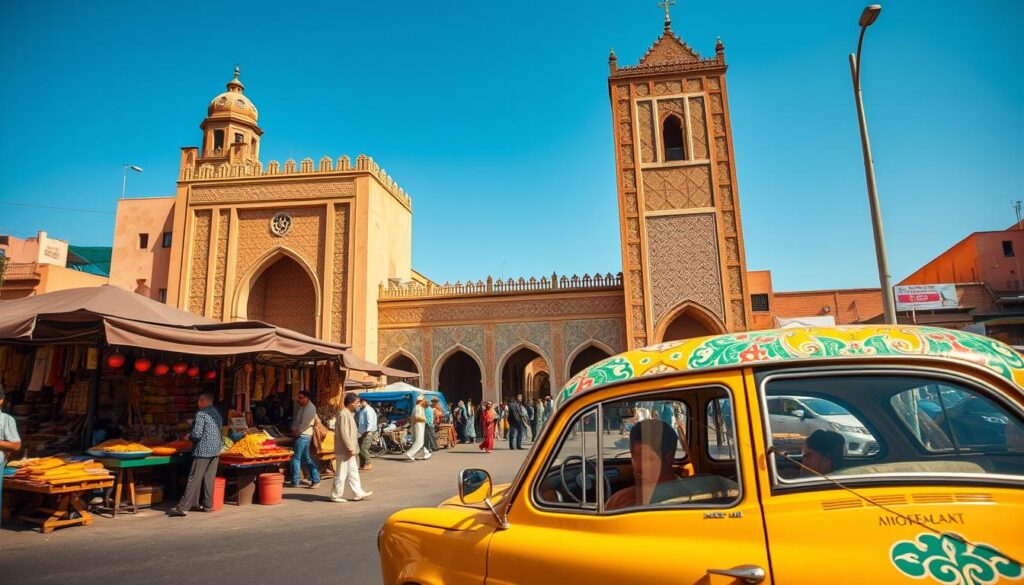
The famous Jemaa el-Fnaa square is the epicenter of Marrakech’s activity, with its snake charmers, street performers, and food stalls. The surrounding Medina, or old city, is a maze of narrow streets and alleys, filled with shops selling everything from spices to handicrafts.
The Bahia Palace is a masterpiece of Islamic architecture, with its intricate woodwork and beautiful tile work. The Majorelle Gardens, a botanical garden created by French artist Jacques Majorelle, is another must-visit attraction in Marrakech.
Fes: The Cultural Capital
Fes is often considered the cultural capital of Morocco, with its well-preserved medieval architecture and rich cultural heritage. The city’s ancient Medina, Fes el Bali, is one of the largest and most well-preserved in the world.
The Ancient Medina of Fes el Bali
Fes el Bali is a labyrinth of narrow streets and alleys, filled with historic landmarks such as the Al-Attarine Madrasa and the Bou Inania Madrasa. Visitors can get lost in the Medina’s winding streets, discovering hidden gems and experiencing the local culture.
Traditional Tanneries
The traditional tanneries of Fes are a fascinating sight, with their colorful dye pits and traditional leatherworking techniques. Visitors can observe the tanning process up close and even purchase leather goods from local artisans.
Rabat and Meknes: Royal Cities
Rabat and Meknes are two royal cities that offer a glimpse into Morocco’s rich history. Rabat, the capital city, is known for its historic landmarks such as the Kasbah of the Udayas, while Meknes is famous for its Roman ruins and historic architecture.
| City | Main Attractions | Historical Significance |
|---|---|---|
| Marrakech | Jemaa el-Fnaa, Bahia Palace, Majorelle Gardens | Red City, UNESCO World Heritage Site |
| Fes | Fes el Bali, Al-Attarine Madrasa, Traditional Tanneries | Cultural Capital, Ancient Medina |
| Rabat | Kasbah of the Udayas, Royal Palace | Capital City, Historic Landmarks |
| Meknes | Roman Ruins, Meknes Medina | Royal City, Historic Architecture |
Coastal Charms: Morocco’s Atlantic and Mediterranean Shores
As you journey along Morocco’s Atlantic and Mediterranean shores, you’ll discover a world of contrasts. The coastline is dotted with vibrant cities, quaint fishing villages, and stunning beaches, each offering a unique experience.
Casablanca: Modern Morocco
Casablanca, the economic hub of Morocco, is a city of modernity and contrasts. Its sleek skyscrapers stand alongside historic landmarks like the Hassan II Mosque, one of the world’s largest mosques. Visitors can enjoy the city’s vibrant nightlife, explore its bustling markets, or simply relax on one of its beautiful beaches.
Essaouira: The Windy City
Essaouira, known for its windy beaches and artistic vibe, is a charming coastal town. The city’s medina is a UNESCO World Heritage Site, filled with narrow streets, charming shops, and delicious seafood restaurants. Visitors can enjoy water sports, explore the nearby Essaouira Islands, or simply soak up the laid-back atmosphere.
Tangier and Chefchaouen: Northern Gems
Tangier, a city with a rich history, offers a blend of cultures, from its medina to its modern art scene. Nearby, Chefchaouen is famous for its blue-painted buildings and relaxed atmosphere, making it a perfect destination for those seeking tranquility. Both towns are rich in history and natural beauty, offering visitors a unique and unforgettable experience.
Discover Morocco’s Natural Wonders
From the vast expanses of the Sahara Desert to the majestic peaks of the Atlas Mountains, Morocco’s natural beauty is unparalleled. The country’s diverse landscapes offer a wide range of experiences for travelers, from adventure and exploration to relaxation and tranquility.
The Sahara Desert Experience
The Sahara Desert is one of Morocco’s most iconic natural wonders. Visitors can embark on camel treks across the dunes, experiencing the vastness and beauty of the desert landscape.
Camel Treks and Overnight Camps
Camel treks allow travelers to explore the Sahara’s vast expanses, reaching remote areas and enjoying the serene beauty of the desert. Overnight camps under the stars provide a unique and memorable experience.
Merzouga and Erg Chebbi Dunes
The Erg Chebbi Dunes near Merzouga are among the most spectacular in the Sahara. Visitors can watch the sunrise over the dunes, take a camel trek, or simply enjoy the tranquility of the desert.
Atlas Mountains: Hiking and Berber Villages
The Atlas Mountains offer a range of hiking opportunities, from gentle walks to challenging treks. Visitors can explore Berber villages, experiencing the local culture and hospitality.
Cascades d’Ouzoud and Other Natural Attractions
Morocco is home to numerous natural attractions, including the Cascades d’Ouzoud, one of the country’s most beautiful waterfalls. Visitors can swim in the natural pools, hike to the waterfalls, or simply enjoy the scenery.
The diversity of Morocco’s natural wonders makes it a unique destination for travelers, offering a blend of adventure, culture, and natural beauty.
Moroccan Culture and Traditions
Morocco’s rich cultural heritage is a fascinating blend of Berber, Arab, and African influences. This diverse cultural landscape has shaped the country’s traditions, arts, and daily life.
Diverse Cultural Influences
The cultural identity of Morocco is deeply rooted in its history, with significant contributions from Berber, Arab, and African cultures. The Berber culture, in particular, has played a crucial role in shaping the country’s customs and traditions. The influence of Arab culture is evident in the language, architecture, and cuisine, while African rhythms and melodies have enriched Moroccan music and dance.
Religious Practices and Festivals
Morocco is an Islamic country, and religious practices are an integral part of daily life. The month of Ramadan is a significant period of fasting and reflection, while Eid al-Fitr marks the end of Ramadan with feasting and celebrations. Other important festivals include the Mawlid al-Nabi, celebrating the birth of the Prophet Muhammad.
Traditional Arts and Crafts
Moroccan traditional arts and crafts are renowned for their beauty and craftsmanship. Some of the most notable include:
- Carpet weaving and textiles, which are highly prized for their intricate patterns and vibrant colors.
- Pottery and metalwork, which showcase the skill and artistry of Moroccan craftsmen.
Carpet Weaving and Textiles
Moroccan carpets are famous for their intricate designs and vibrant colors, often reflecting the weaver’s personal expression and cultural heritage. Textiles, including clothing and home decor, are also significant, with traditional garments like the djellaba being worn on special occasions.
Pottery and Metalwork
Moroccan pottery is known for its colorful glazes and geometric patterns, while metalwork, including intricate silver and copper pieces, is used to create beautiful decorative items and jewelry. These crafts not only reflect the country’s rich cultural heritage but also contribute to the local economy.
Culinary Journey Through Morocco
The flavors of Morocco are as diverse as its landscapes, with a rich culinary heritage that reflects its history and cultural influences. Moroccan cuisine is a blend of Berber, Arab, and Mediterranean traditions, resulting in a unique gastronomic experience.
Tagines, Couscous, and Street Food
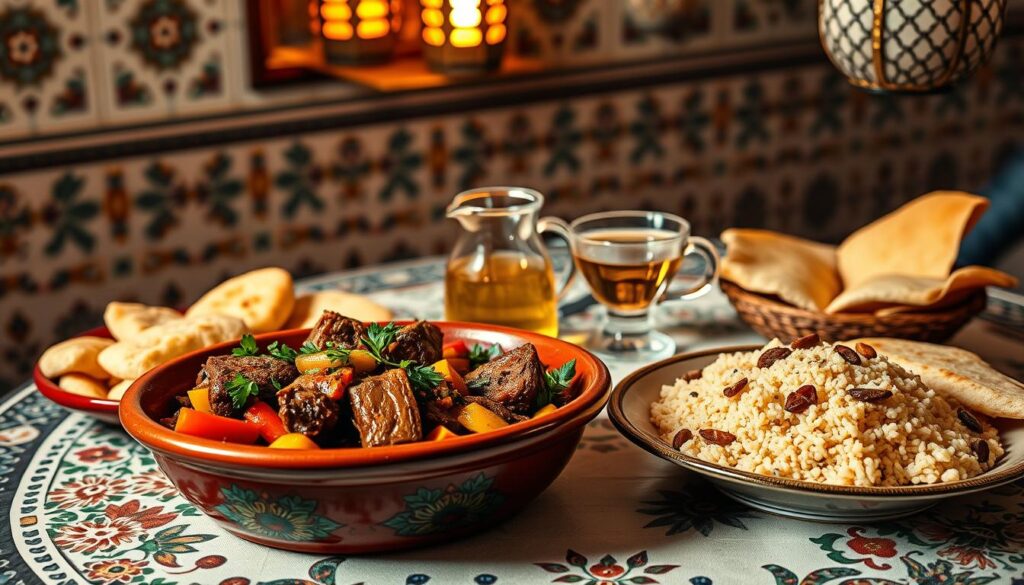
Moroccan cuisine is renowned for its tagines, slow-cooked stews named after the earthenware pots in which they are cooked. These dishes are typically made with meat, vegetables, and dried fruits, creating a rich and aromatic flavor profile. Couscous, often considered Morocco’s national dish, is a semolina flour pasta served with vegetables and meat. Street food is also a significant part of Moroccan culinary culture, with popular items like grilled meats, falafel, and freshly squeezed orange juice.
Mint Tea and Coffee Culture
No visit to Morocco is complete without experiencing its mint tea culture. This refreshing beverage is a symbol of hospitality and is typically served throughout the day. Moroccan coffee is also gaining popularity, with traditional cafes serving strong, rich coffee in small cups.
Spices and Food Markets
Moroccan cuisine is characterized by its use of a wide variety of spices, including cumin, coriander, cinnamon, and turmeric. The vibrant souks (markets) are where locals and visitors alike can explore the array of spices, fresh produce, and local handicrafts. These markets are a sensory feast, with colors, aromas, and sounds combining to create an unforgettable experience.
| Ingredient | Common Use |
|---|---|
| Cumin | Tagines and stews |
| Coriander | Meat dishes and marinades |
| Cinnamon | Desserts and tagines |
Shopping and Authentic Experiences
From vibrant souks to serene hammams, Morocco is a land of contrasts that promises unforgettable experiences. As you explore this enchanting kingdom, you’ll discover a world of authentic shopping and cultural immersion.
Navigating the Souks: What to Buy
Morocco’s souks are a treasure trove of goods, from vibrant textiles to intricate handicrafts. When shopping in the souks, it’s essential to know what to look for. Some of the top items to consider include traditional Moroccan tiles, handmade leather goods, and artisanal jewelry.
Haggling Tips for Americans
Haggling is an art in Morocco’s souks. To get the best deals, start by researching the market value of the items you’re interested in. Be prepared to negotiate, and don’t be afraid to walk away if the price isn’t right. A friendly smile and a willingness to engage in conversation can go a long way in securing a fair price.
Authentic Souvenirs
When it comes to souvenirs, look for items that reflect Morocco’s rich cultural heritage. Some authentic options include hand-carved wooden crafts, traditional Berber textiles, and local spices. These unique items will serve as a reminder of your time in Morocco.
Hammam Experiences
A visit to a traditional hammam is a quintessential Moroccan experience. These steam baths offer a relaxing respite from the hustle and bustle of the souks. Many hammams also offer additional treatments, such as massages and scrubs, to rejuvenate your body and mind.
Cultural Workshops and Classes
Morocco is a country rich in cultural heritage, and one of the best ways to experience this is by participating in a cultural workshop or class. From cooking classes to traditional craft workshops, there are numerous opportunities to learn new skills and gain a deeper understanding of Moroccan culture.
By immersing yourself in Morocco’s souks, hammams, and cultural workshops, you’ll create lasting memories of your trip. Whether you’re shopping for unique souvenirs or experiencing the local culture, Morocco has something to offer every traveler.
Practical Travel Tips for American Visitors
Traveling to Morocco from the United States involves several considerations to ensure a smooth and enjoyable trip. Understanding the local culture, customs, and travel requirements can significantly enhance your experience.
Visa Requirements and Safety Information
American citizens do not need a visa for tourism or business stays up to 90 days. However, it’s essential to ensure your passport is valid for at least six months beyond your intended stay. For safety, Morocco is generally considered safe, but as with any travel, being aware of your surroundings and keeping valuables secure is advisable.
Transportation Options Within Morocco
Morocco offers various transportation options, including modern trains connecting major cities like Marrakech, Rabat, and Casablanca. Buses are another affordable option, with companies like CTM offering reliable services. For shorter distances, taxis are readily available, and renting a car can provide flexibility for exploring rural areas.
Accommodation Choices: From Riads to Resorts
Morocco offers a wide range of accommodations to suit different preferences and budgets. Traditional riads in Marrakech and Fes offer a unique cultural experience, while modern resorts along the coast provide luxury and comfort. For a more authentic experience, staying in a kasbah or a guesthouse in the Atlas Mountains can be a memorable choice.
By being informed and prepared, American visitors can have a rewarding and enjoyable trip to Morocco, immersing themselves in the rich culture and beauty of this enchanting kingdom.
Conclusion: The Timeless Appeal of Morocco
Morocco’s diverse landscapes, rich history, and vibrant culture create a timeless appeal that draws travelers from around the world. From the bustling streets of Marrakech to the serene Sahara Desert, Morocco travel offers an unforgettable experience.
The country’s unique blend of Berber, Arab, and African influences is evident in its architecture, cuisine, and traditions, making Moroccan culture a fascinating aspect of any visit. Whether exploring the historic cities, relaxing on the Atlantic coast, or trekking through the Atlas Mountains, there’s something for every traveler in Morocco.
As you plan your journey to this captivating destination, you’ll discover that Morocco’s timeless appeal lies not only in its stunning natural beauty but also in its warm hospitality and rich heritage. Embracing the local customs, trying the delicious cuisine, and exploring the vibrant souks will make your Morocco travel experience truly unforgettable.